
Responsible Gambling
At Fallsview Casino, we believe that gambling should remain a form of entertainment rather than a source of financial pressure or emotional distress. As an independent gambling information and affiliate website, our goal is to provide Canadian players with educational resources, casino reviews, bonus information, and practical guidance that promotes informed and responsible decision-making.
Responsible Gambling and Responsible Gaming principles are essential in Canada’s evolving iGaming environment. While our platform may feature affiliate partnerships and promotional content, we encourage all visitors to approach gambling with caution, set personal boundaries, and seek support whenever gaming activities no longer feel enjoyable or manageable.
This page explains how to maintain healthy gambling habits, recognise early warning signs, protect vulnerable individuals, and access support services available across Canada.
Keeping Gambling as Entertainment
For most adults, online gambling and casino gaming are recreational activities that can be enjoyed responsibly. The key principle of Responsible Gambling is understanding that wagering involves risk and that outcomes are based on chance. Gambling should never be viewed as a guaranteed source of income or a way to solve financial difficulties.
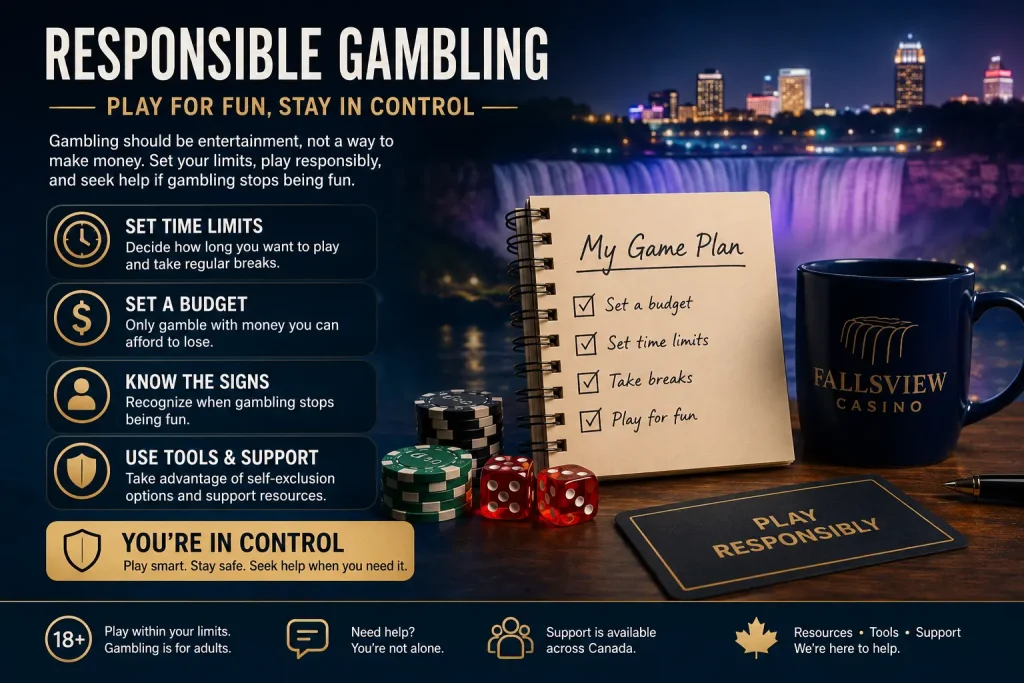
Healthy gambling behaviour often includes setting clear time and spending limits before playing, taking regular breaks, and accepting losses as part of the entertainment cost. Our educational articles, including our FAQ section, provide additional information about gaming terminology, bonuses, and casino practices that can help players make informed choices.
Responsible players typically avoid chasing losses, borrowing money to gamble, or using gambling as a coping mechanism during stressful periods. Maintaining balance between gaming activities and personal responsibilities contributes significantly to long-term wellbeing.
Building Healthy Personal Limits
Creating realistic boundaries is one of the most effective ways to enjoy gambling responsibly. A gambling budget should only include discretionary funds that a person can comfortably afford to lose without affecting essential expenses such as rent, mortgage payments, food, transportation, or family obligations.
Many players find it helpful to establish personal rules before opening a casino website or placing a wager:
- Set a maximum deposit amount for each week or month.
- Decide in advance how much time will be spent gambling.
- Take regular breaks and avoid extended gaming sessions.
- Never gamble while under the influence of alcohol or emotional distress.
- Keep gambling separate from savings and household finances.
Banking safeguards such as spending alerts, prepaid cards, and separate entertainment budgets can provide additional protection against excessive gambling behaviour.
When Gambling Starts Becoming a Problem
Problem gambling often develops gradually and may not be immediately noticeable. Emotional, behavioural, and financial changes can indicate that gambling has moved beyond recreational entertainment and may require intervention.
Some common warning signs include:
- Feeling anxious or irritable when unable to gamble.
- Increasing wager sizes to achieve the same level of excitement.
- Hiding gambling activities from family members or friends.
- Neglecting work, education, or personal responsibilities.
- Experiencing debt due to gambling-related spending.
- Attempting unsuccessfully to reduce or stop gambling.
Gambling addiction can significantly affect relationships, emotional health, and financial stability. Individuals experiencing these challenges should consider seeking professional guidance and support services as early intervention often leads to better outcomes.
Common Misconceptions About Gambling
Many harmful gambling behaviours are influenced by misconceptions about how games work. Understanding the realities of chance-based games can help players make more informed decisions and avoid unrealistic expectations.
| Myth | Reality |
|---|---|
| A losing streak means a win is due. | Each game round is independent and random. |
| Skill can control slot machine outcomes. | Slot outcomes are determined by Random Number Generators. |
| Gambling can provide reliable income. | Casino games are designed for entertainment and involve financial risk. |
| Winning back losses is easy. | Chasing losses often leads to greater financial harm. |
Recognising these misconceptions can reduce impulsive decisions and support healthier gaming habits.
Looking After Emotional and Financial Wellbeing
Emotional wellbeing plays an important role in responsible gambling. Stress, loneliness, anxiety, and financial difficulties can increase the likelihood of risky behaviour. Gambling should never be used as an escape from personal challenges or negative emotions.
Players may benefit from regularly reviewing their finances and asking themselves several important questions:
- Am I gambling with money needed for essential expenses?
- Do I feel pressure to recover previous losses?
- Has gambling negatively affected my relationships?
- Am I spending more time gambling than originally planned?
Canadians seeking guidance and educational materials may access resources from Responsible Gambling Council, which provides information on prevention, awareness, and healthy gaming practices.
Taking a Break Through Self-Exclusion and Digital Tools
Many Canadian provinces provide options that allow individuals to step away from gambling activities temporarily or for longer periods. Self-exclusion programs can restrict access to participating gambling platforms and help players regain control over their behaviour.
In Ontario, players can explore available information through iGaming Ontario, which provides details about regulated gaming initiatives and player protection measures within the province.
Additional protective tools may include:
- BetBlocker and similar gambling-blocking software.
- Website and device restrictions.
- Deposit and spending limits.
- Transaction monitoring and banking controls.
- Temporary account cooling-off periods.
These measures can be valuable for individuals who wish to reduce gambling exposure or establish healthier habits.
Protecting Minors and Vulnerable Persons
Gambling activities in Canada are intended exclusively for adults who meet the legal age requirements established by their province or territory. Underage gambling can expose young people to financial harm and increase the likelihood of developing unhealthy attitudes toward betting and risk-taking.
Parents and guardians are encouraged to take practical measures to minimise exposure to gambling content:
- Use parental control software on digital devices.
- Keep account credentials private.
- Monitor online activity where appropriate.
- Discuss the risks associated with gambling and betting.
- Avoid sharing payment information with minors.
Vulnerable individuals, including those experiencing financial hardship or mental health challenges, may also benefit from additional safeguards and support networks.
Support for Families and Professional Assistance
Problem gambling affects more than the individual who gambles. Family members and close friends may experience emotional stress, relationship difficulties, and financial consequences. Open communication and early support can make a significant difference.
Individuals seeking confidential information and community services can contact ConnexOntario, which connects Ontario residents with mental health, addiction, and gambling support resources.
Peer support programs and counselling services can help individuals understand their gambling behaviour, develop coping strategies, and rebuild financial and emotional stability.
About Our Editorial Approach and Affiliate Relationships
Fallsview Casino operates as an independent gambling information and affiliate platform. We publish educational materials, casino reviews, bonus comparisons, slot guides, and payment method information intended to help Canadian players make informed decisions.
Some pages on our website may contain affiliate links, which means we may receive compensation if visitors choose to register with third-party operators. These commercial relationships do not influence our commitment to promoting Responsible Gambling principles or our editorial standards.
Additional information regarding our practices can be found in our Privacy Policy and Terms & Conditions.
Frequently Asked Questions
Is gambling addiction considered a medical condition?
Problem gambling is recognised as a behavioural addiction that can have serious emotional, social, and financial consequences. Professional assistance may be beneficial when gambling becomes difficult to control.
Can setting a budget prevent gambling problems?
Budgeting cannot eliminate all risks, but it can significantly reduce the likelihood of excessive spending and help maintain gambling as a recreational activity.
What should I do if someone close to me has a gambling problem?
Approach the situation with empathy, encourage open conversations, and suggest professional support services when appropriate.
Are self-exclusion programs available in Canada?
Yes. Several provinces and regulated operators offer self-exclusion and account restriction programs designed to support responsible gaming practices.
Does this website provide gambling counselling?
No. Our website provides educational information and responsible gambling guidance only. We do not offer medical advice, counselling, or gambling treatment services.
If you have questions about our Responsible Gambling information, notice potentially inaccurate content, or wish to contact our editorial team regarding player protection matters, you may reach us at [email protected] or visit our Contact Page. We encourage all visitors to seek professional assistance whenever gambling begins to negatively affect their wellbeing or financial circumstances.